You may have seen our recent announcement on social media, but in case you missed it, we have some thrilling news to share! We're teaming up with Santa Barbara Nutrients and Juntendo University for an innovative clinical study. Together, we'll be investigating the impact of nutrition and lifestyle on ADPKD (Autosomal Dominant Polycystic Kidney Disease)!
This groundbreaking program will combine RISE’s kidney-friendly ketogenic protocol with SBN’s medical food, KetoCitra, to study their effects on ADPKD patients in Japan.
For more information, check out the press release here!
Japanese food culture and the ketogenic diet
In Japan, the ketogenic diet is still relatively uncommon. This posed a unique challenge for us as we adapt it into Japanese dietary customs.
For context, Japanese meals are traditionally carbohydrate-rich, featuring staples like sushi, onigiri (rice balls), rice bowls, noodles, and even bread or pastries.
Here's a glimpse into a typical day of Japanese meals (1):
- Breakfast: Rice with salmon or natto, tea broth with rice, or a quick sandwich for those on-the-go.
- Snack: More rice-based snacks like onigiri or bread, pastries, or crackers.
- Lunch / Dinner: Sushi, rice bowls, bento boxes, onigiri, or noodle dishes like ramen or yakisoba.
Moreover, Japanese meals tend to be lower in fat compared to Western meals. According OCED Statistics, in 2020, the average daily fat intake in Japan is around 90.7 grams, whereas in the United States, it's nearly double at 183.9 grams (2).
In Japanese meals, you'll often find clear, oil-free soups like miso soup. Proteins like fish are often served raw (sashimi), grilled or pan-fried in very little oil. Sides include pickles, seaweed, cooked vegetables or salads dressed in rice vinegar and soy sauce, sometimes also using sesame and mayonnaise.
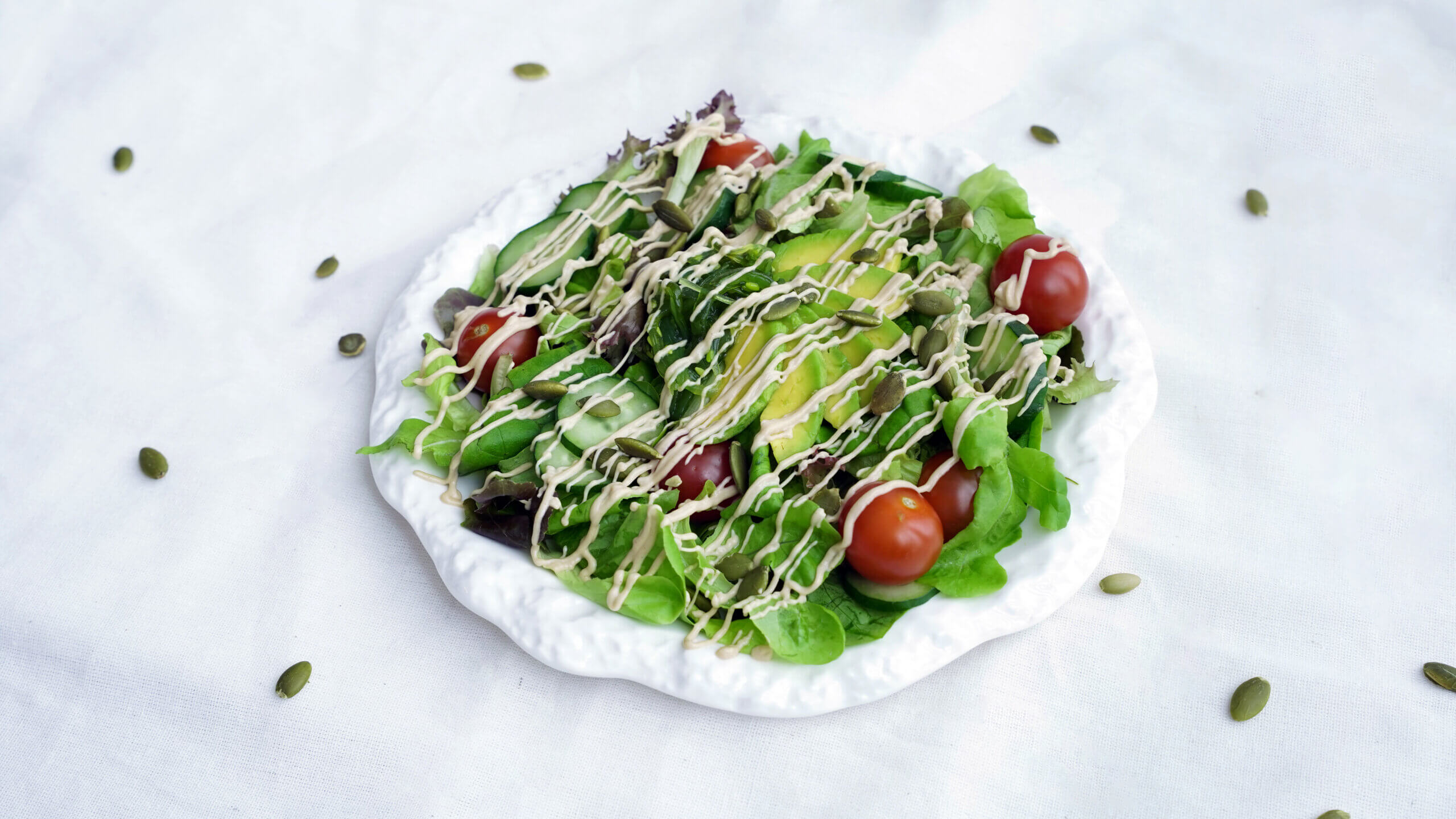
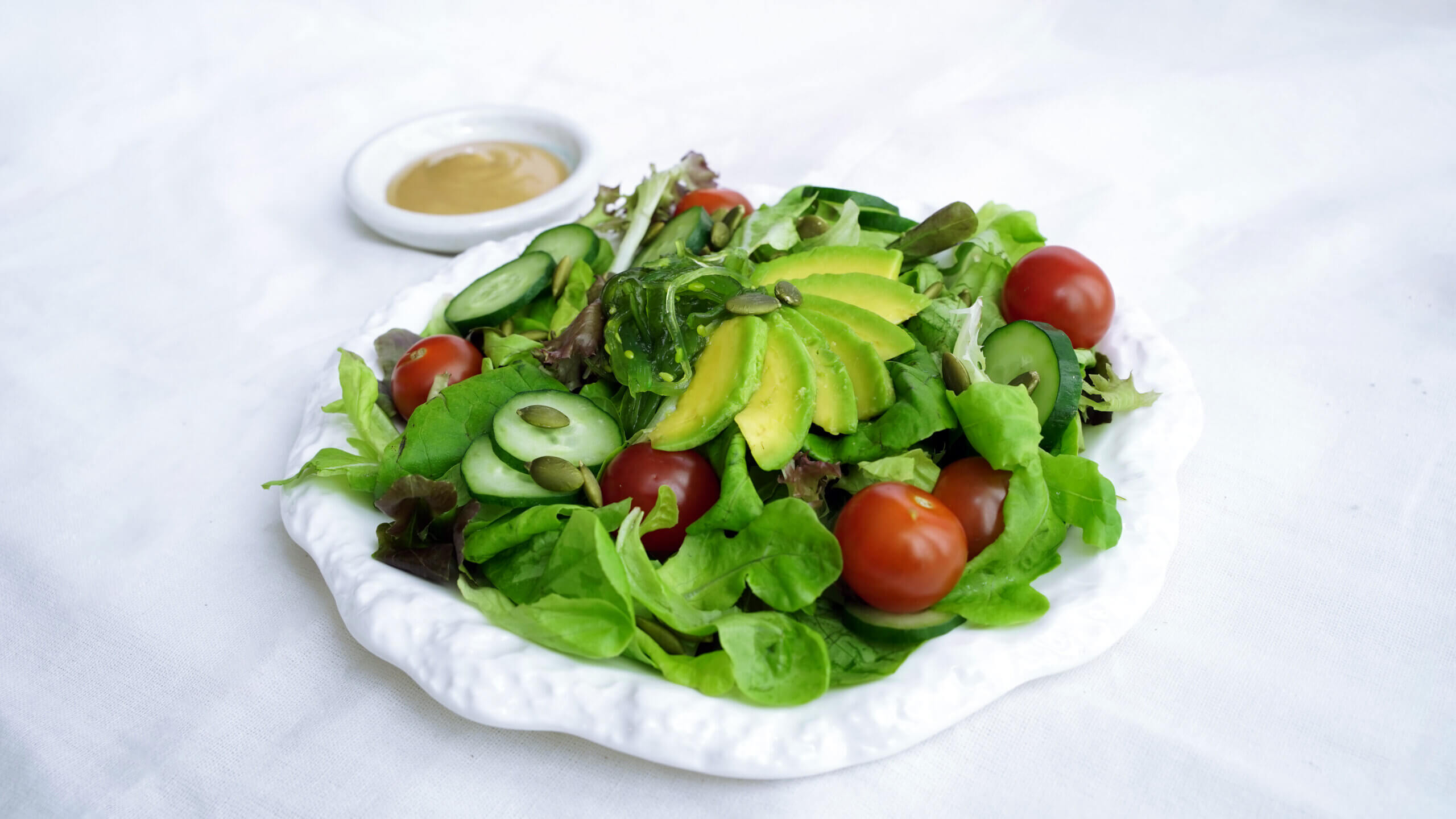
Speaking of sesame and mayonnaise, they serve as the inspiration behind our PKD-friendly Sesame Salad! Both ingredients are commonly used for flavor and as sources of fat in Japanese cuisine, making them perfect for our mission to increase fat content while catering to Japanese palates.
Are sesame seeds high in oxalates?
Yes! Unhulled sesame seeds contain up to 342 mg of oxalates per tablespoon! However, most sesame seeds you find in stores are hulled. This reduces their oxalate content (3), though specific numbers are unavailable.
What about tahini? Tahini, essentially ground sesame seeds or sesame seed butter contains 16 mg oxalates per tablespoon. It is lower in oxalates because it is typically made with hulled sesame seeds. If you're watching your oxalate intake, stick to small portion sizes.
And sesame oil? Good news—oils are low in oxalates. A tablespoon of sesame seed oil contains only 2 mg of oxalates, likely due to the removal of hull and other solid residues during processing.
So, to sum up:
- Sesame seeds (likely unhulled): 342 mg oxalates / tablespoon
- Tahini: 16 mg oxalates / tablespoon
- Sesame seed oil: 2 mg oxalates / tbsp
For our Japanese sesame salad dressing, we strike a balance with oxalates without compromising on flavor. We use just ½ teaspoon of tahini for creaminess, body, and color, relying mainly on sesame oil for that bold sesame flavor.
Need help managing oxalates? Or interested in learning more about including favorite foods in your PKD-friendly diet? Book a free discovery call with a KNI dietitian and begin your kidney health journey today!
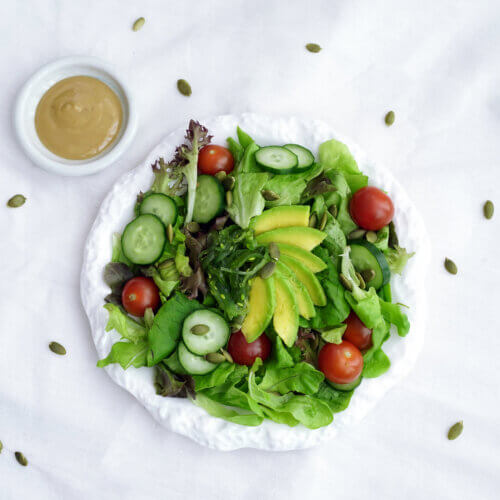
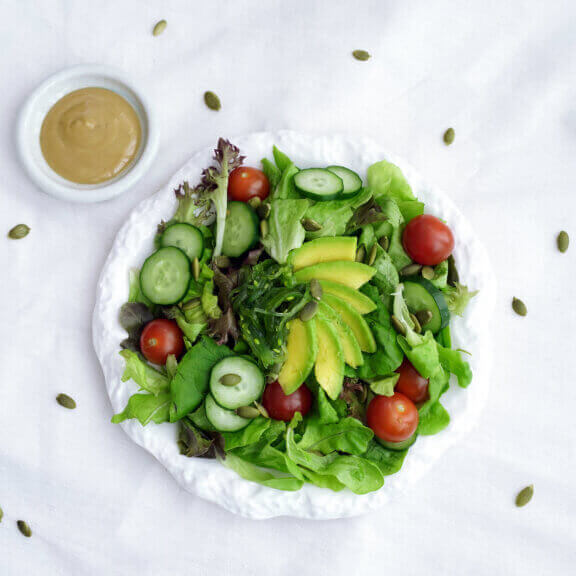
Sesame Salad
Ingredients
- 1 1/2 tbsp mayonnaise
- 1 tsp sesame oil
- 1/2 tsp soy sauce
- 1/2 tsp mirin
- 3 cup mixed greens (avoid spinach for low oxalate)
- 2/3 cup cucumber, sliced
- 1/2 avocado, sliced
- 1/3 cup cherry tomatoes, halved
- 1/4 cup chuka wakame, store bought
- 1 1/2 tbsp pumpkin seeds, toasted
Instructions
- In a small bowl, combine mayonnaise, sesame oil, soy sauce, tahini, and mirin. Set aside.
- In a bowl, add mixed greens and top with sliced cucumbers, diced avocado, tomatoes, and chuka wakame.
- Drizzle dressing over vegetables and top with a sprinkle of pumpkin seeds. Enjoy!
Nutrition
KNI Verdict of Our Sesame Salad
We're absolutely smitten with this Japanese-inspired salad. While it is not traditional, we adore its vibrant green color, bold sesame flavor, the delightful textural interplay of creamy avocado, crisp seaweed, crunchy seeds, and juicy tomatoes.
Most importantly, it is a kidney-friendly salad!
So, if you are looking for a light, fiber-rich salad for a quick lunch or dinner, this Sesame Salad is just perfect for you!
And the best part? It's customizable! Add salmon, tuna, tofu, or a hard-boiled egg for extra protein. Don't have chuka wakame on hand? No problem—crumble over a seaweed sheet snack for that extra burst of flavor.
Ready to personalize your renal diet today? Book a free discovery call with a KNI dietitian and begin your kidney health journey today!
Want more tasty and kidney-friendly recipes?
Check out the KNI Shop and choose a 7-day meal plan that works for you. We have meal plans for dialysis, early-stage CKD, PKD and Stage 5 CKD. Full recipes and nutrition information included, along with a grocery list!