
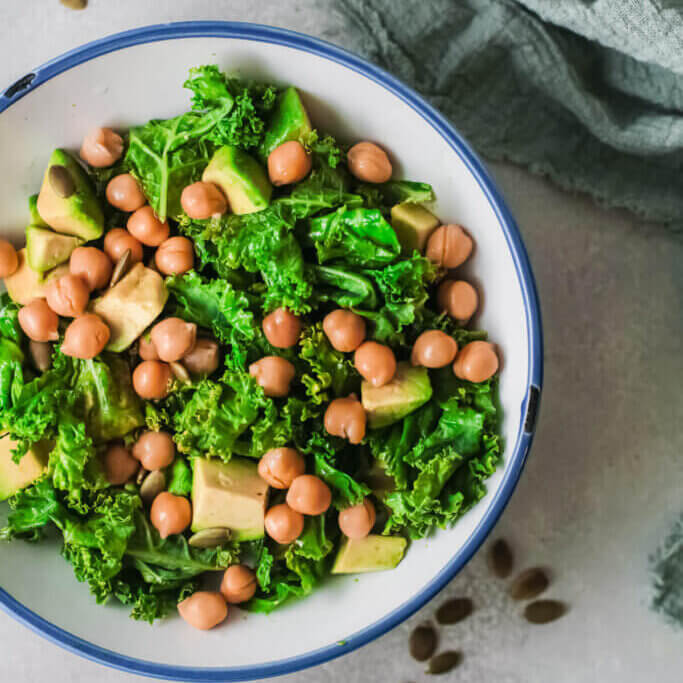
Ready for a recipe reset now that spring has arrived? Enter the Lemony Kale and Chickpea Salad! This tangy and toothsome salad is a delicious plant-based option for lunch or dinner. It’s a cinch to throw together, but don’t forgo massaging the kale. This is an important step to help break down the fiber in the kale so it is not as tough.
Wondering whether or not beans are a kidney friendly food? Read on to learn more about why we believe beans belong on the CAN DO list for kidney disease!
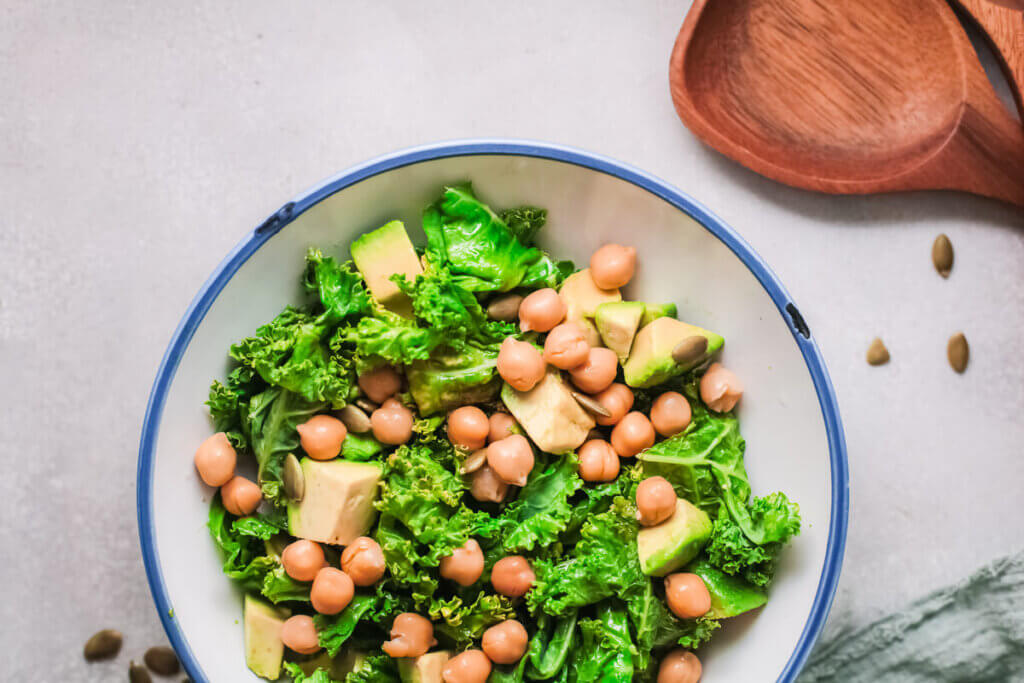
Chickpeas: a great source of plant-based protein
Chickpeas (also known as garbanzo beans) are one of the many types of beans. Beans come from a class of vegetables called legumes. Lentils and peas are also part of the legume family.
Beans and legumes are a nutritional powerhouse! Full of soluble and insoluble fiber, they also pack a mean punch of complex carbohydrates, protein, as well vitamins and minerals.
A low protein or very low protein diet is a nutritional therapy to slow the progression of kidney disease for individuals with stage 3-5 CKD not receiving dialysis. Plant-based diets, such as the DASH Diet or Mediterranean diet are also showing great promise in research to be kidney protective. An easy way to scale back on protein is by swapping plant-based sources of protein for animal sources of protein. Check out how the protein in one serving of beans stacks up against a small serving of chicken:
| Chicken breast, skinless, 3 ounces | 26 grams protein |
| Canned chickpeas, drained and rinsed 1/2 cup | 6 grams protein |
Big difference, right? Protein from animal sources can add up very quickly!
Can people on dialysis eat plant-based sources of protein such as beans?
Individuals that are receiving dialysis have higher protein requirements. However, there are no drawbacks for people on dialysis to include more plant-based foods. In fact, studies show that eating a whole food plant-based diet reduces the risk of cardiovascular disease. Cardiovascular disease is a risk factor for individuals with CKD and especially for people on dialysis. If you are on dialysis and are interested in including more plant-based foods into your diet, work with the Registered Dietitian at your dialysis center. They will help you incorporate more plant-based foods while keeping your protein and potassium requirements in mind.
But what about the potassium and phosphorus in chickpeas and other beans?
Beans are usually found in the limit or avoid category of traditional renal diet lists. That’s because beans are a great source of minerals including potassium and phosphorus. You might be surprised to see that animal protein also contains potassium and phosphorus. Take a look at how chicken and chickpeas compare.
| Potassium | Phosphorus | |
| Chicken breast, skinless- 3 ounces | 210 mg | 185 mg |
| Low sodium canned chickpeas, drained and rinsed- 1/2 cup | 100 mg | 70 mg |
Keep in mind that different types of meat and beans have varying amounts of phosphorus and potassium. However, by substituting animal protein sources for beans, you may be consuming the same amount of potassium and phosphorus or even less!
In addition, phosphorus that is found in plants is bound to fiber and is poorly absorbed compared to the phosphorus found in dairy, meat, and processed foods.
Preparing beans
Beans can be found either dried or canned. While dried beans will be lower in sodium, they do take more time to prepare. If it is more convenient to use canned beans, try to look for products that are either low sodium or with no salt added and always drain and rinse your canned beans to reduce the salt even more.
Want to learn more about the foods we use to help support kidney health?
Discover how we use the power of nutrition and create a whole person approach to preserve kidney function by joining our monthly class or by booking an appointment with one of our expert Renal Dietitians.
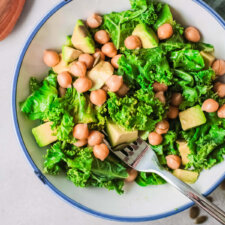
Lemony Kale and Chickpea Salad
Ingredients
- ¾ cup water or low sodium vegetable broth
- ½ cup pearl or Israeli couscous
- 3 tablespoons extra virgin olive oil
- 2 tablespoons lemon juice
- ½ teaspoon mustard
- ¼ teaspoon sea salt
- 4 cups of kale leaves stems removed, leaves thinly sliced
- ½ cup canned chickpeas drained and rinsed
- ½ avocado cubed
- 2 tablespoons pumpkin seeds
Instructions
- In a small saucepan, bring ¾ cup water or broth to a boil. Once at a boil, add couscous, lower the heat, and let simmer for 10 minutes or per package directions. Cooked pearl couscous will be plump, slightly chewy, and tender but still retains some bite. Once cooked, remove from the heat, drain any excess water, and set aside to allow it to cool.
- In a small bowl, whisk the olive oil, lemon juice, mustard, and sea salt. Adjust seasoning to taste by adding more lemon juice for tang or an extra pinch of salt to taste.
- Place kale in a mixing bowl. Drizzle half of the dressing over the kale and massage the leaves with your hands until they just start to wilt and become tender.
- Divide couscous between 2 bowls. Top with the massaged kale, chickpeas and avocado and pumpkin seeds. Drizzle the remaining dressing and toss before serving. Enjoy!
Variations:
- More crunch: Roast the chickpeas with additional seasoning before adding to the salad.
- More vegetables: Add sliced onion, peppers, or shredded carrots for more color.
- More flavor: Toast dry couscous in some olive oil or vegan butter for 1-2 minutes before adding in hot water or vegetable broth.
Notes
Nutrition
KidneyRD Verdict:
I’m often in a rush at lunch time and look for something that will not only be easy to put together but will also be tasty and satisfying. This salad did not disappoint! I loved the lemony tang of the simple olive oil and lemon dressing, combined with all of the textures from the kale, chickpeas, pepitas, and avocados. I’ve made it several times for a quick and easy lunch and often add different vegetables to fulfill my veggie quota. The best part is that it makes two servings so I’ve got lunch ready to go for the next day!

ALL information you read on KidneyRD.com is purely for informational and educational purposes. Information is not intended to treat, cure or prevent any disease.
Pingback: Alkaline Green Power Smoothie - Kidney RD