
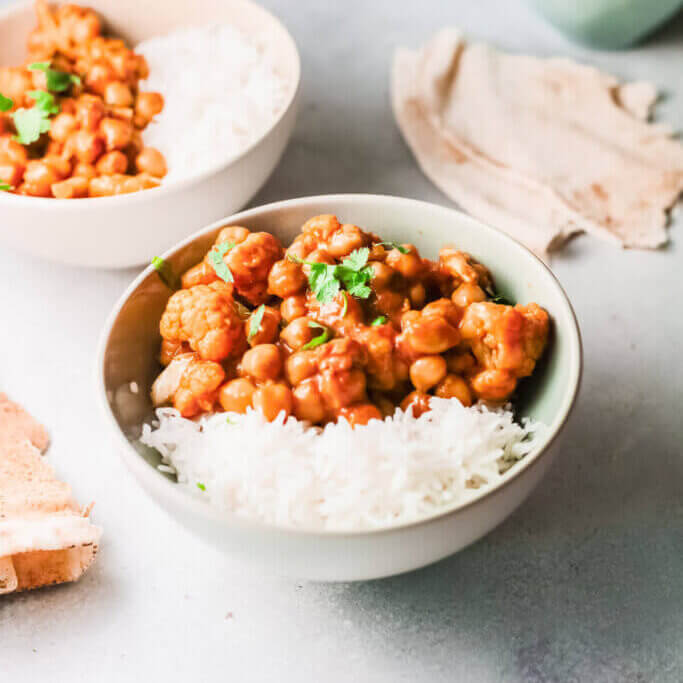
Chicken tikka masala is an icon of Indian cuisine. We love this tasty tomato-based curry so much; we set out to put a vegan twist on this classic dish. The result, plant-based perfection! Chickpeas and cauliflower take the place of chicken for a satisfying and fiber-rich meal.
It’s lower in protein and sodium, but there’s one thing it doesn’t lack- flavor! So if you’re cooking for your kidney health, read on to learn everything you need to know to make this super simple dish!

Ingredients
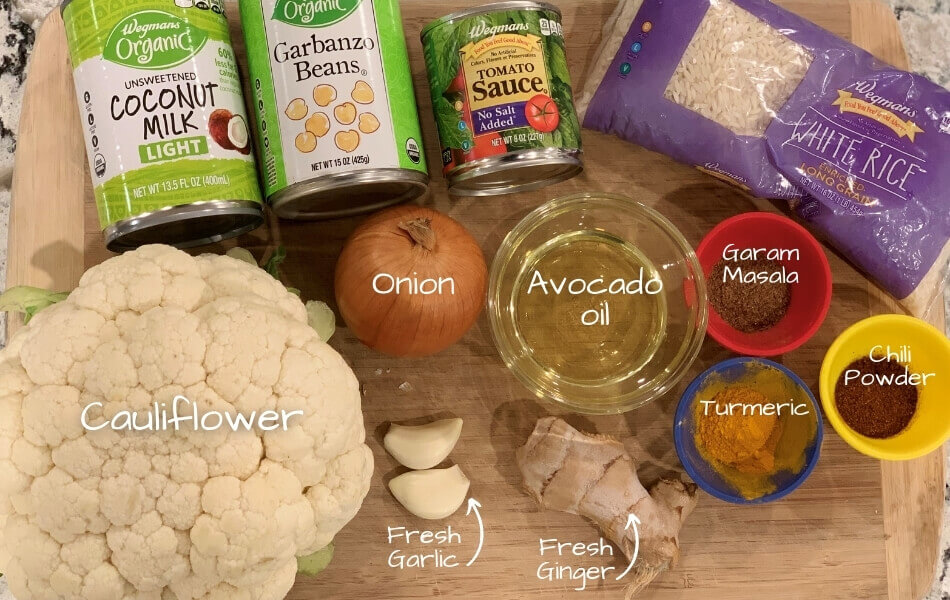
- Avocado oil: we love Avocado’s oils neutral taste and heart healthy fat. If you don’t have avocado oil on hand, olive or coconut oil would be a great option!
- Ginger: check out our tips on storing fresh ginger in the recipe FAQ’s
- Garam masala: what’s garam masala? Find out more about this Indian spice blend from our friends at the Spruce Eats
- No salt added tomato sauce: to keep this recipe low in sodium we’ve opted for no added salt tomato sauce
- Cauliflower: Choose prechopped or a fresh head and chop your own!
- Canned chickpeas: Check out the FAQ’s below for more information on canned chickpeas
- Canned coconut cream or coconut milk: Check out our recipe FAQ’s for more information on canned coconut milk
- Indian roti or chapati: if you can’t find this feel free to use pita bread or naan but doing so will change the nutrition facts.
Step by step instructions
The instructions can be found in the recipe card, but if you’d like a little preview, here is more detail on the step-by-step process!
Make your white rice as you begin preparing the curry.
I like to set myself up for success by preparing as much as possible before I begin cooking. First, chop the onions, garlic, and grate fresh ginger. Next, chop and rinse cauliflower well. Finally, mix spices in a small bowl so that you are ready to add them quickly.

Saute the onion for 5 minutes, and then add garlic and ginger, stirring for one minute so that the garlic doesn’t burn. Add the spices and stir for 10-15 seconds. Toasting the spices for this short time helps to enhance the flavor.

Add your liquids and cauliflower, stir well, and cover. Simmer over low heat for about 8-10 minutes or until the cauliflower is fork-tender. You may need to add additional water if the sauce becomes too thick before the cauliflower has had a chance to soften.

After 8-10 minutes and when the cauliflower has softened, uncover and add beans and coconut milk or cream. Stir well and bring back to a gentle simmer to warm chickpeas through.

Prepare your chapati, roti, or pita bread during the last steps, and then voila! Bon Appetite!
Recipe FAQ’s
Prefer brown rice? Not a problem; feel free to swap it out. Just be mindful that choosing brown rice over white will increase the recipe’s protein, potassium, and phosphorus content. Quinoa or couscous would also work well for this dish.
Ginger root is an ingredient that you don’t need a lot of- similar to herbs. And while it isn’t that expensive- we hate wasting good food. So to keep ginger root fresh and get the most life out of it, we recommend freezing any unused portion.
Check out this great post on how to freeze fresh ginger from Rustic Wise. Another option is to use pre-minced ginger.
We are often asked if canned beans are a good choice if you have kidney disease. While most canned foods can be packed with sodium, canned beans won’t break the sodium bank. We recommend choosing low sodium or no added salt canned beans whenever possible to cut back on salt.
In addition, draining and rinsing the beans well help to remove some of the salt. Pro tip: We have noticed that organic canned beans typically contain less sodium than conventional canned beans, although the price is a little bit higher.
Coconut is one of those controversial foods. But in the spirit of all foods fit, we love using coconut for the delicious flavor and fat profile. Remember that when following a low protein diet- fat is our friend!
Canned coconut milk comes in both full fat and light (lower fat) options. If you are concerned about the high-fat content of canned coconut milk, feel free to opt for the light version.
Concerned about the potassium in coconut milk? Check out our modifications below!
CKD Benefits and modifications
Benefits
This all-in-one dish is a can-do for kidney health! Here are a few of the reasons why we love it!
- It’s low in both sodium and protein
- It’s a great source of fiber
- The phosphorus is from plant sources, which means only half of the ~200 mg per serving is absorbed
- It’s chock full of veggies, and veggies are a key ingredient f or good health!
Modifications
Spicier: For a spicier version, add 1-2 finely chopped bird’s eye chili in step 1 or add more chili powder in step 2.
Higher Protein: Substitute up to half of the cauliflower with firm or extra firm tofu or add a whole can of chickpeas.
Lower Potassium: Add less coconut cream or use unsweetened, plain dairy-free yogurt in place of coconut cream.
More recipes like this
Love a one-pot dish (ok, 2 with the pot for rice) that comes together in less than 30 minutes? Us too! Check out these similar recipes:
Want to learn more about how we combine delicious food and the power of nutrition to preserve kidney function?
We are here to help! Join our monthly class to find out how we use the power of nutrition to help preserve kidney function. If you prefer a one-to-one setting, consider booking a session with one of our expert Renal Dietitians.
Vegan Tikka Masala
Ingredients
- ¾ cup long grain white rice uncooked
- 1½ cups water
- 4 tablespoons avocado oil divided
- 1 medium red onion sliced thinly
- 2 cloves garlic minced
- ½ teaspoon ginger grated
- 1 teaspoon garam masala
- 1 teaspoon chili powder
- 1 teaspoon turmeric
- ¾ cup tomato sauce no salt added
- ¾ cup water or more as needed
- 4 cups cauliflower cut into florets
- ½ cup canned chickpeas rinsed and drained
- ⅓ cup canned coconut cream or coconut milk
- ¼ teaspoon salt to taste
- Optional garnish: chopped cilantro
- 2 medium Indian roti or chapati about 7” in diameter
Instructions
- Cook rice in a saucepan with water per package directions.
- In another sauté pan over medium heat, heat 3½ tablespoons of oil. Add red onion and sauté until slightly soft and golden brown, about 5 minutes.
- Add garlic and ginger, cook while stirring for about 1 minute or until fragrant. Then add garam masala, chili powder, and turmeric, and toast for 10-15 seconds, followed by the tomato sauce, water, and cauliflower. Mix well, then lower the heat, cover, and let simmer for 8-10 minutes or until the cauliflower is tender and cooked through. Add more water as needed if your sauce becomes too thick before your cauliflower is cooked.
- Add chickpeas and coconut milk or cream. Stir well and let it come to a gentle simmer just to warm through. Season with salt to taste, garnish with chopped cilantro, then remove from the heat.
- Optional: brush the remaining oil on the Indian roti or chapati and toast for a few seconds in a skillet over medium-high heat. Cut in half or quarters before serving.
- To serve, divide cooked rice between four plates, scoop vegan tikka masala on top of or beside rice along with one or two pieces of toasted roti. Enjoy!
Notes
Nutrition
KidneyRD verdict:
Chicken tikka masala is a family favorite in my house, so we were a bit skeptical about trying anything other than the classic version of perfectly spiced deliciousness. But, I’m happy to report that we were all more than pleasantly surprised at how good this homemade and “chickenless” version is! It will be a new staple for our meatless Monday meals!
I loved how quickly this dish came together, which made it a very doable weekend meal. However, I especially loved the addition of veggies and beans for an all-in-one plant-powered meal! In addition, the serving sizes were generous and satisfying. This dish will be a do-over!
ALL information you read on KidneyRD.com is purely for informational and educational purposes. Information is not intended to treat, cure, or prevent any disease.
So much conflicting info on internet. Some kidney organizations say NOT to include beans, lentils, nuts for people following low protein, low potassium, low phosphorous and low sodium diet, but yet here is a pulse recipe and I see turmeric added. Most resources say turmeric is not suitable for failing kidneys.
This is all very confusing
Hi Ann,
We couldn’t agree more that there is so much conflicting information on the internet about what to eat for kidney health. The truth is there is no one-size-fits-all diet for people with kidney disease. Regarding the recommendations to avoid beans and nuts- that is because these foods do have some potassium and phosphorus in them. Meat, like chicken and fish, also contains potassium and phosphorus. Beans and nuts are much lower in protein per serving than meat, and they provide lots of healthy fiber! Newer research has informed us that it is safe and beneficial for people with kidney disease to include beans, nuts, etc. If you are feeling confused, we recommend working one-on-one with a renal dietitian to help you determine a plan that is specific to your individual needs.