
If you’ve followed our work at Kidney Nutrition Institute, you already know this:
nutrition is foundational to kidney health.
For years, we’ve talked about the power of a more plant-forward, kidney-supportive way of eating. Not as a trend. Not as an extreme diet. But as a balanced, sustainable strategy to support kidney function, metabolic health, and long-term resilience.
The good news? The science has caught up with what we see every day in practice.

What Is PLADO?
PLADO stands for Plant-Dominant Low-Protein Diet.
In simple terms, it means:
- Plants are the foundation of your meals
- Protein is personalized, not eliminated
- Whole foods come first
- Processed foods are minimized
PLADO is not a strict vegan diet
In more scientific terms, PLADO is typically defined as:
- Protein around 0.6–0.8 g/kg/day, adjusted to labs and health needs
- More than 50% of protein from plant sources
- High fiber intake (about 25–30 g/day)
- Lower sodium intake (generally under 3,000 to 4,000 mg/day)
- Adequate calories to prevent muscle loss (1)
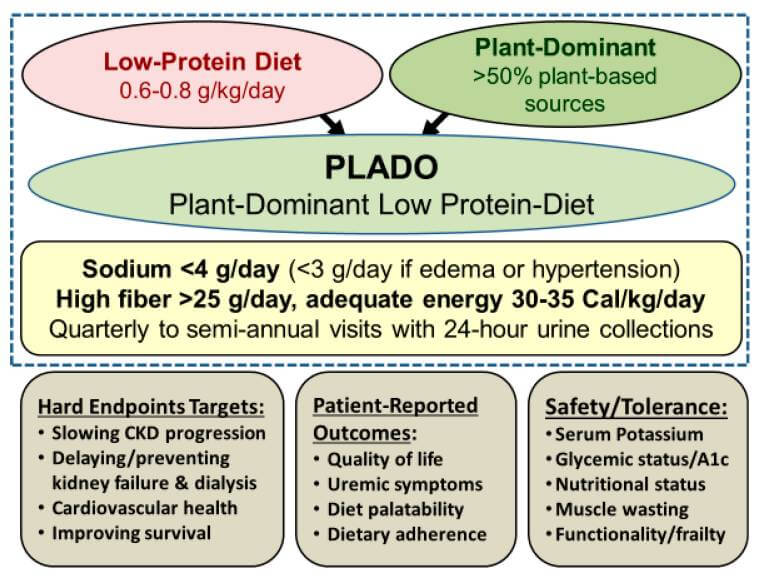
PLADO Image from https://doi.org/10.3390/nu12071931
Why PLADO Works for Kidney Health
A growing body of research shows that a plant-dominant approach can benefit people with chronic kidney disease (CKD) in several important ways.
Studies have found that PLADO can:
Help protect kidney function and slow CKD progression
Improve acid–base balance, reducing stress on the kidneys
Support heart health by improving blood pressure and cholesterol
Reduce buildup of kidney-related toxins
Lower inflammation and oxidative stress
Strengthen the gut microbiome, which directly affects kidney health
These benefits matter because kidney disease is rarely just about the kidneys. It affects the heart, the gut, energy levels, and overall quality of life. (2,3)
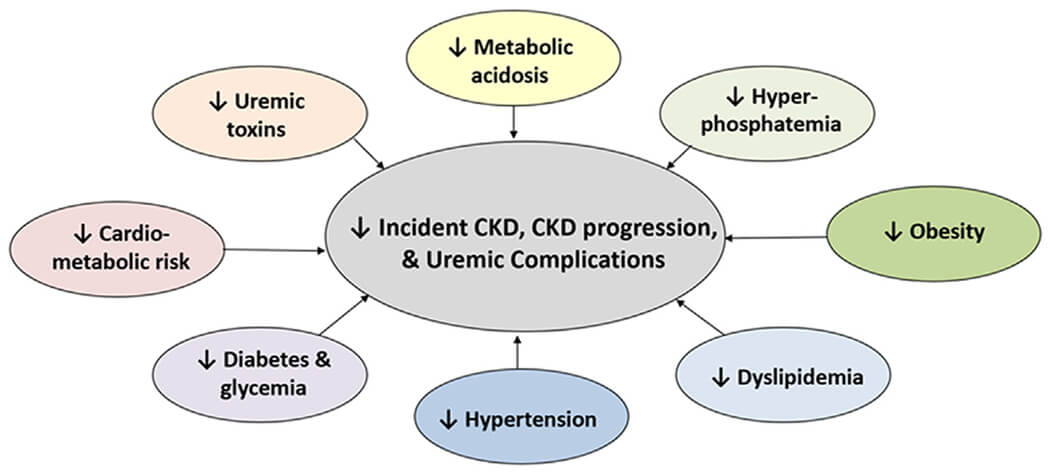
PLADO Benefits Image from https://doi.org/10.1053/j.jrn.2023.06.010
Get your FREE nutrition jumpstart guide & meal plan!
Where Protein Fits In (and Why It’s Been So Confusing)
For decades, CKD nutrition focused almost entirely on protein restriction.
“Eat less protein” was often the only message.
What was missing?
- Protein source
- Overall diet quality
- Fiber intake
- Acid load
- Gut health
We now know protein needs are individualized. Many people with CKD do well in the range of 0.6–0.8 g/kg (1), but the right amount depends on:
- Lab values
- CKD stage
- Age
- Activity level
- Overall health
Protein works best inside a balanced dietary pattern, not in isolation.
This is where PLADO helps. It places protein in the right context instead of making it the enemy. As always, consult with your dietitian for more personalized recommendations.
Simple Ways to Start a PLADO Approach
You don’t need to overhaul your diet overnight. Small changes matter.
Here are three easy places to begin:
1. The Breakfast Swap
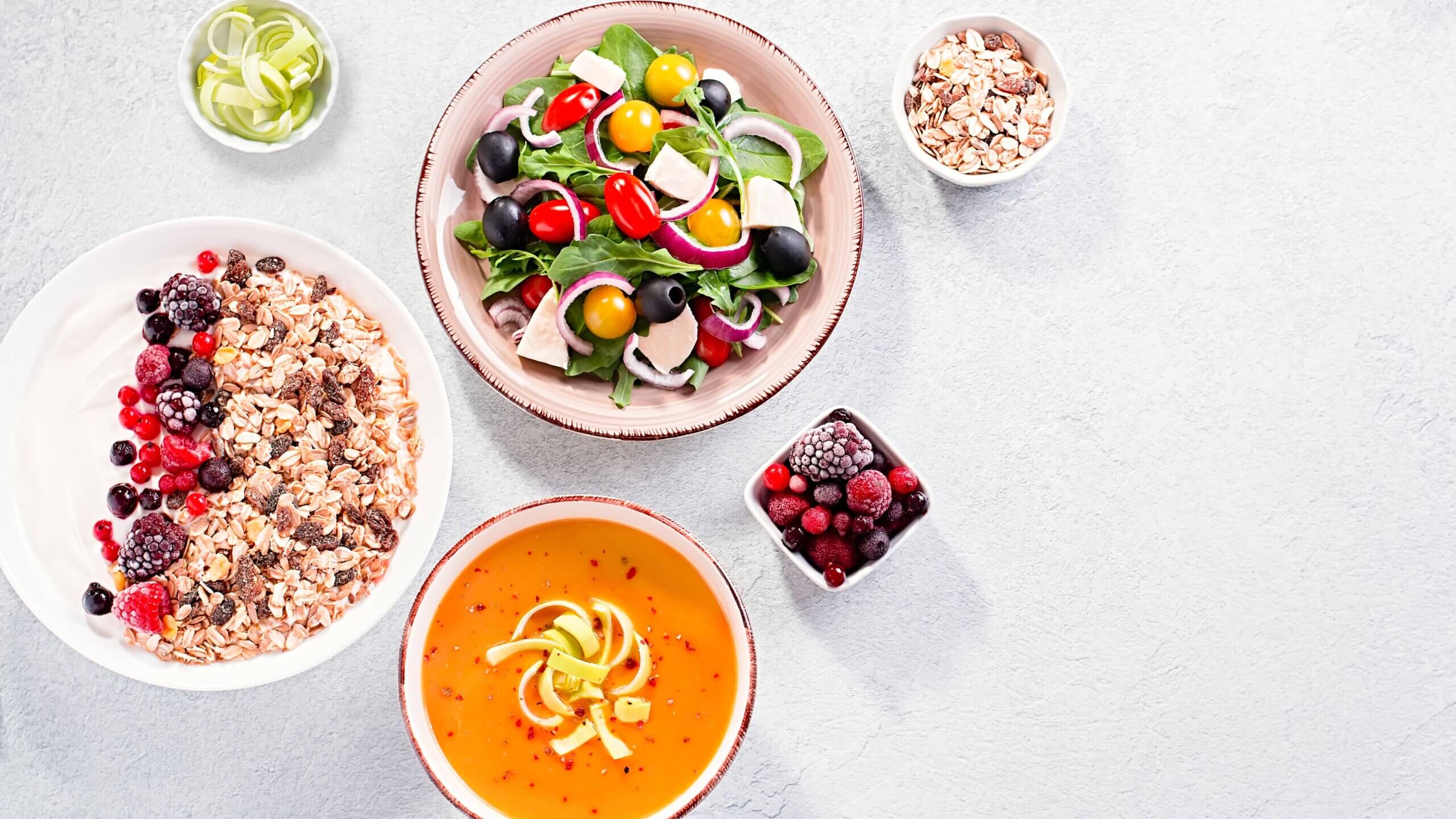
Try oatmeal with berries and nuts instead of eggs and bacon.
This can cut your morning protein load while adding fiber and antioxidants.
Pro tip: Overnight oats make this easy and grab-and-go.
If you're more a savory breakfast person, try loading your eggs up with vegetables like in our Veggie-Loaded Egg Scramble. Remember, plant dominant doesn't mean NO animal, it means, well full of plants!
2. The Half-and-Half Rule
At lunch, use half the usual meat and double the veggies. For example, if you like tuna fish, mix in extra celery, some chopped red peppers or load it in a lettuce wrap. Alternatively, swap your meat for a plant source. We love, as do many patients our chickpea "chicken salad" sandwich.
You’ll still get protein — just in a gentler way.
3. The Power Bowl
Once a week, build a dinner bowl:
- Brown rice or quinoa
- Roasted vegetables
- Beans or lentils
- Avocado
- Your favorite dressing
It’s filling, kidney-friendly, and great for leftovers.
The Most Important Takeaway: Personalization Matters
PLADO nutrition for CKD is powerful — but it works best when it is personalized.
Some people do best with a little animal protein.
Others thrive with plants only. And whether you use animals or plants getting enough overall calories, while cutting back protein is crucial for maintaining muscle mass.
What matters most is having a plan that is:
- Safe
- Evidence-based
- Sustainable
- Matched to your labs and goals
This is where many people get stuck.

How RenAlign Helps You Apply PLADO With Confidence
RenAlign is our 10-week, dietitian-led group program designed to help people with CKD:
- Implement PLADO sucessfully and with lots of encouragement and support!
- Personalize protein without guesswork
- Understand labs clearly
- Increase energy!
- Be able to travel, eat out, and go to social events without worrying if you're going to hurt your kidneys with new or different foods.
We've ran group programs for many years at Kidney Nutrition Institute and here is what we see really really works for people.
- Weekly live classes (with recordings) - there is something about showing up, learning, asking questions, and connecting with people working as hard as you that is powerful!
- Three 1-on-1 dietitian sessions: We could put this program on "view only" but we have seen again and again, that the magic and transformation is from having an expert cheerleader who knows you, values the relationship, values your work in the program and is there to guide you AND make specific modifications just for you! If you've ever tried a diet and failed it is probably that the diet failed you (because it wasn't fitting your needs) not that you failed the diet.
- Lab reviews - This is the feedback that really drives decisions
- Practical tools - like meal plans, recipes, and food tracking plus weekly checkins from your dietitian to show you how to tweak YOUR intake.
- Support from people who believe nutrition not only makes a difference but it is often the difference.
If you’re ready to feel like your food makes sense and is helping you, RenAlign can help you align your nutrition with your kidney goals.
Work With Us
Our proprietary Kidney Health Method is the framework that we use with our patients to see HUGE results! We can do the same for you. To start feeling better NOW, book an appointment with one of our renal dietitians!