
The Ultimate Meal Planning Guide for Kidney Health
This post is sponsored by Otsuka America Pharmaceutical, Inc. However, all opinions are my own.
Disclaimer: Please be advised that some of these foods may contain wheat/gluten, milk, eggs, peanuts, tree nuts, fish, shellfish, soy or other foods that may cause allergic reactions in some people. Please contact your healthcare provider if you are concerned about food allergies or other food-related reactions such as food sensitivities.
If you or a loved one lives with a kidney disease, such as polycystic kidney disease (PKD) or autosomal dominant polycystic kidney disease (ADPKD), then you probably know that proper meal planning is crucial in following a renal diet. This type of diet is low in sodium, phosphorous and protein, and meal prepping may seem complicated due to the dietary modifications. However, breaking down those recommendations into simple principles and creating a clear meal planning guide will make the prep process much easier.

Let’s Start with the Basics
1. Find recipes to try
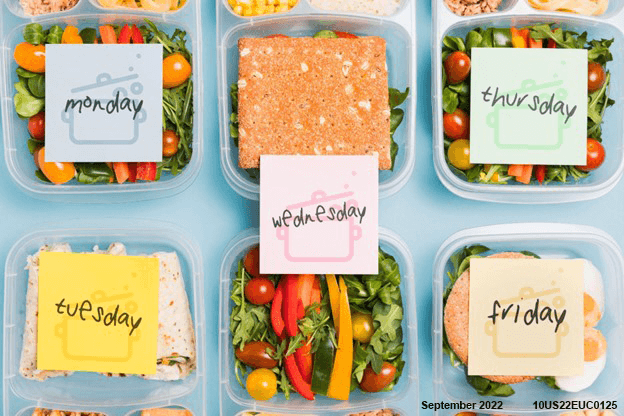
The easiest way to meal plan is to start with your most familiar recipes. Plan to make larger batches and have leftovers if you want to minimize cooking time throughout the week.
Don’t be afraid to try new recipes to make your mealtimes more exciting.
A couple places to find kidney-friendly recipes to try:
- NephU Kitchen Creations for Kidney Health Cookbook
- Kidney Nutrition Institute Blog
- Try some whole-food, plant-based recipes from popular bloggers. They are NOT kidney-specific recipes, so you likely will need to modify sodium, potassium, and protein content as needed. If you’re managing your oxalate intake, start by watching out for heavy hitters like spinach, almond and almond products, beets, and rhubarb which may show up in these recipes.
2. List ingredients you might need on your grocery list
Having a grocery list can help you stay organized and prevent you from buying food items that will not help you progress towards your goals. In addition, buying only what you need can help reduce food waste and therefore may help save $$$.
As you add recipes into your meal plan, I recommend listing out any ingredients you may need to buy on the grocery list. Remember to also adjust the ingredients needed if you double or triple the recipe for batch cooking.
Once you are finished, make sure there is a variety of fruits and vegetables on your grocery list. If you are concerned about fresh fruits and vegetables going bad in your fridge, feel free to include frozen or canned produce but make sure there are no added sugars, salt, seasonings, or sauces. Challenge yourself to try at least one new fruit or vegetable each week!
3. Follow your meal plan!
I recommend posting your plan on the fridge so it is easily accessible. Manage your meal prepping schedule depending on your time. If you don’t have much time for cooking on weekdays, try completing most of your meal prepping on the weekends.
This may seem like a lot of steps, but don’t worry. Getting the hard work done in the beginning to be more prepared and organized can help make your mealtimes more seamless and stress-free. An added bonus: you can reuse your meal plan for the next week or use it as a template with modifications to make your meal planning process faster.
Example of a 3-Day Renal Diet Meal Plan
Day 1
Day 2
Day 3
Breakfast
Leftover Lemon Blueberry Chia Seed Pudding*
1 cup coconut yogurt
½ cup strawberries
¼ cup chopped pecans
Lunch
Mediterranean Wrap:
- ½ whole wheat pita
- ½ cup chickpeas
- ½ cup chopped cucumber
- ¼ chopped red pepper
1 serving Kitchen Creations For Kidney Health: Dijon Mustard Vinaigrette Salad Dressing
Veggie Sandwich:
- 2 slices sourdough bread, toasted
- 1 serving leftover White Bean Dip*
- 1 serving leftover Hummus Roasted Veggies
Veggie Wrap:
- 1 whole wheat tortilla
- 1 cup sliced vegetables (red peppers, cucumbers, or lettuce)
- 1 tsp extra virgin olive oil
- ½ cup chickpeas, slightly mashed
- 1 serving leftover White Bean Dip*
Snack
Kitchen Creations For Kidney Health: White Bean Dip*
½ tbsp extra virgin olive oil
1½ oz low sodium crackers
½ cucumber, sliced
1 apple
2 tbsp sunflower seed butter
1 cup blueberries
¼ cup walnuts
Dinner
Hummus Roasted Veggies (serves 4)
- 3 cups broccoli
- 1 head cauliflower
- 1 cup hummus
- 3 tbsp olive oil
½ cup cooked brown rice
3 oz tofu, baked or pan fried
1 serving Dijon Mustard Vinaigrette Salad Dressing
Kitchen Creations For Kidney Health: Vegan Alfredo Sauce Over Whole Wheat Pasta*
Simple Salad
- 2 cups mixed greens
- 1 serving Dijon Mustard Vinaigrette Salad Dressing
Leftover Vegan Alfredo Sauce Over Whole Wheat Pasta*
Leftover Hummus Roasted Veggies
Nutrition
Kcal: 1740 kcal
Fat: 95 g
Protein: 44 g
Carbs: 191 g
Iron: 14 mg
Zinc: 6 mg
Potassium: 2260 mg
Sodium: 1280 mg
Kcal: 1770 kcal
Fat: 75 g
Protein: 53 g
Carbs: 240 g
Iron: 18 mg
Zinc: 5 mg
Potassium: 2570 mg
Sodium: 1530 mg
Kcal: 1700 kcal
Fat: 85 g
Protein: 51 g
Carbs: 210 g
Iron: 16 mg
Zinc: 6 mg
Potassium: 2615 mg
Sodium: 1260 mg
*If you have ADPKD/PKD and are watching your oxalate intake, consider these modifications:
- For the Chia Seed Pudding, substitute flaxseed for chia seeds to lower oxalate content
- For the White Bean Dip and Vegan Alfredo, use lima beans or butter beans instead of cannellini beans because cannellini beans are very high in oxalates
Example of a 3-Day Renal Diet Meal Plan

*If you have ADPKD/PKD and are watching your oxalate intake, consider these modifications:
- Lower the oxalate content in the Chia Seed Pudding by substituting flaxseed for chia seeds
- For the White Bean Dip and Vegan Alfredo, use lima beans or butter beans instead of cannellini beans because cannellini beans are very high in oxalates
Meal Planning Tips for Kidney Health
So, is meal planning worth the extra time when you’re on a renal diet for your kidney disease, like ADPKD? We say yes!
But how do you do it when there are so many complicated pieces to the diet? To simplify your renal diet meal plan, focus on these five principles of meal planning for kidney health.
1. Get a tool to help you plan meals and save time
Dedicate at least 15 to 30 minutes per week to plan your meals for the week. This is usually best just before you go to the grocery store. A few easy tools to help you:
- A simple meal planning template PDF with a shopping list
- or this meal planning template with an extra section to plan your meal prep
2. Take note of your daily or weekly food habits
Start planning your meals based on your current habits. Knowing these habits can simplify your meal and recipe choices later. For instance:
- You always eat oatmeal for breakfast
- You prefer grab-and-go lunches
- You have dinners with family members
- You don’t mind eating leftovers
3. Consider how much time you actually want to spend in the kitchen
You may relate to one of these three cooking types:
A. You’re super busy and prefer minimal cooking time: Prioritize large batch cooking or freezer-friendly meals and try to get most of your meal prep done on the weekends. Your meal prep may involve cooking complete meals or meal components for simple assembly or reheating during the week. Meal examples:
- Overnight oats or chia puddings (like this yummy Lemon Blueberry Chia Pudding) for breakfast – vary toppings with frozen or fresh fruits to keep your meals interesting
- Freezer-friendly black bean burritos – enjoy with a side salad
- Salad jars with dressings on the bottom of the jar (check out this simple Dijon Mustard Vinaigrette)
B. You don’t mind spending ~1 hour per day cooking your meals: Prioritize simple meals, batch cooking, and meal prep on the weekends. Your meal prep may look more like chopping vegetables, pre-cooking grains, or cooking some meal components.
C. You love the kitchen and don’t mind spending all day there: Aim for variation in your recipe choices to keep mealtimes interesting and look for different sources, such as kidney-friendly cookbooks. Meal prepping is optional but recommended for better productivity.
4. Think about what you want to include
When we plan a meal plan, we start by thinking about things that are important to include. This can make it so much easier than trying to think through all the things to eliminate. Foods that are beneficial for your kidneys and overall health include:
A. More vegetables: Fresh vegetables are wonderful, but if you want more convenience, you can also purchase pre-chopped vegetables, salad mixes (without the dressings), as well as frozen or canned vegetables (without added salt, sauces, or seasonings)
B. More fruits: Similarly, fresh fruits are amazing, but frozen, canned, or other shelf-stable fruits without added sugars like applesauce, fruit cups, dried fruits, or raisins can also fit well in a renal diet meal plan
C. More plant foods in place of animal proteins: Some ideas for easy swaps:
- Choose plant milk or yogurt instead of dairy products
- Choose tofu, cauliflower or eggplant steaks instead of beef steaks
- Use mushroom, beans, lentils, or coarsely chopped walnuts instead of ground beef in meat sauces
- Crumbled tofu or cauliflower rice can be used in place of eggs in breakfast scrambles
D. More healthy fats: Fats keep you full, satiated and well-energized throughout the day. Examples of healthy fats include:
- Extra virgin olive oil
- Avocado or avocado oil
- Nuts or nut butter
- Seeds or seed butter
- Coconut products like coconut milk, coconut butter, shredded coconut or coconut flakes
5. Prioritize 3 things to monitor
There are many diet recommendations for kidney health, starting from watching for specific nutrients like sodium or potassium, to whole dietary patterns like the Mediterranean diet.
Prioritizing just three things can make your diet more manageable. This may be different for each person, so make sure to consult your dietitian on your diet plan based on your health condition and goals. The three things we as dieticians like to manage are:
A. Sodium: Excess sodium can increase blood pressure, impact water retention, and worsen hypertension and proteinuria [1]. According to CDC, 70% of sodium consumed is actually from processed and restaurant foods. By prepping your own meals at home, you can significantly manage your sodium intake.
Ways to reduce sodium intake:
- Prioritize fresh, whole foods over processed foods
- Rely on salt-free seasoning like herbs, spices, citrus, vinegars, and aromatics like garlic, ginger, onions, or shallots
- Or make your own seasoning – check out this Taco Seasoning recipe
- If purchasing more processed foods, look for labels like “no salt added,” “sodium-free” or “low sodium”
B. Amount of animal protein: High protein diet with high meat intake may hurt the kidneys and increase the risk for heart disease [2]. For some individuals with PKD, a moderate protein intake can be beneficial, while a low protein intake may benefit those with chronic kidney disease (CKD) and a very low protein intake may be needed for late stages of CKD. In any case, reducing animal foods and increasing intake of plant foods can support kidney health.
C. Other considerations specific to you: Different people with different needs will need additional dietary considerations, such as vegan, gluten-free, carbohydrate-controlled, higher-fat, nut-free, or low-potassium. Specifically, for ADPKD/PKD, you might benefit from a low-oxalate diet. If you’re managing your oxalate intake, start by watching out for heavy hitters like spinach, almond and almond products, beets, and rhubarb, which may show up in some recipes.
Make sure to consult your renal dietitian to find out your top three dietary priorities and how to work that into your meal plan.
Industry Highlight:
One thing we love is to see many organizations focusing on efforts to develop recipes for people with kidney disease. This post is sponsored by Otsuka America Pharmaceutical Inc., who created the Kitchen Creations for Kidney Health Cookbook campaign. This campaign focuses on low sodium, potassium modified recipes without added phosphates. There is a variety of appetizers, sides, entrees and desserts and lists on the exact ingredients you’ll need to make them. It can give you a good jumpstart into some ideas of how to powerpack flavor into your recipes. Please note these are not entirely plant-based or oxalate controlled, but with a few easy swaps, they can work for many people.
Be a part of more recipes for patients?
If you have a kidney-friendly recipe you’d like in the Kitchen Creations for Kidney Health Cookbook, you can submit a brief (250 words) summary about why this meal is special to you to KidneyRecipes@CoynePR.com. If the recipe is selected, a member of the Coyne team will be in touch with more information regarding next steps.
Written by Clarissa Paimanta, RD; Reviewed by Jessianna Saville MS, RDN, LD
October 15, 2022
References:
- Ikizler TA, Burrowes JD, Byham-Gray LD, et al;KDOQI Nutrition in CKD Guideline Work Group. KDOQI clinical practice guideline for nutrition in CKD: 2020 update. Am J Kidney Dis. 2020;76(3)(suppl 1):S1-S107.
- Kalantar-Zadeh K, Joshi S, Schlueter R, Cooke J, Brown-Tortorici A, Donnelly M, Schulman S, Lau W-L, Rhee CM, Streja E, Tantisattamo E, Ferrey AJ, Hanna R, Chen JLT, Malik S, Nguyen DV, Crowley ST, Kovesdy CP. Plant-Dominant Low-Protein Diet for Conservative Management of Chronic Kidney Disease. Nutrients. 2020; 12(7):1931. https://doi.org/10.3390/nu12071931
Thnx!
Glad this was useful to you!