
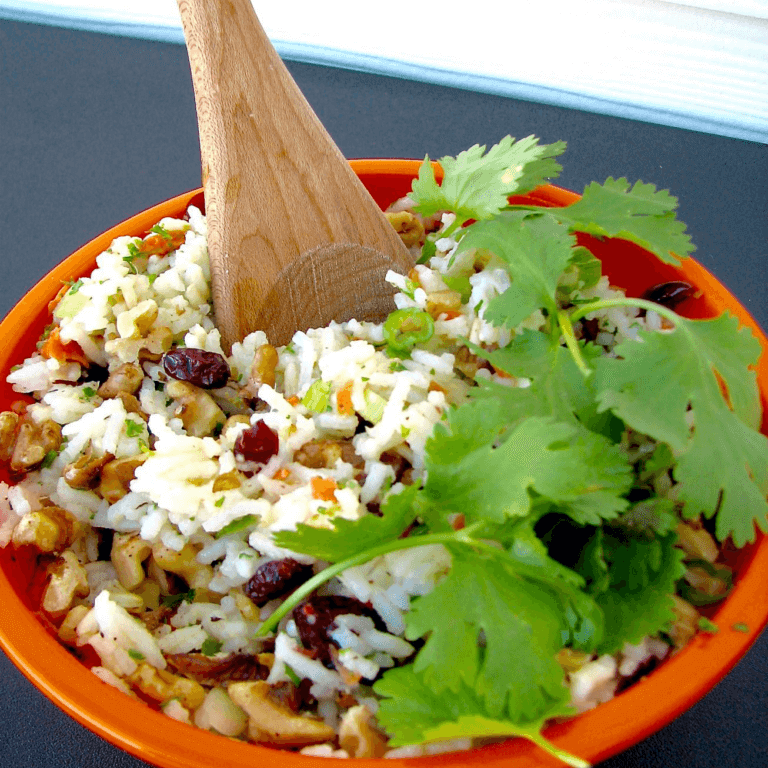
Holidays are a time for favorite side dishes. You know – green bean casserole, stuffing/dressing, jello salad, cranberry sauce, etc… At the dialysis unit last week, I asked all my patient’s their favorite Thanksgiving item and it was, hands down, the dressing (either they knew I was on to them about Texas pecan pie or that really is their favorite….). Most dishes at the holidays are loaded with salt, and many are very potassium heavy (pumpkin pie, sweet potatoes, mashed potatoes). Having a few kidney-friendly side dishes on the table to complement some of the old classics can help avoid an emergent trip to the ER for high potassium or avoid a high blood pressure hangover for several days following the holiday (which, yes will damage your kidneys).
This little beauty of a recipe presents very well on the holiday table and tastes fantastic. Plus it is simple and easy to prepare – it does require a some chopping (which I took care of in nothing flat in my food processor, but still would not take long without the food processor).
A Couple Key Notes:

1. TOAST your walnuts. Since you’re using such a small amount, toasting your walnuts will help magnify the flavor. Click here for more info on toasting walnuts
2. White Rice versus Wild Rice: We made the recipe both ways. Wild rice adds a much more earthy flavor, while the white rice (I happened to have Basm ati on hand) gives a beautiful blank canvas for the sweet cranberries and tart dressing to shine. But, you’ve probably been told to only eat white rice…not true in most cases and here is why: Wild rice has about 66mg more phos than white rice (134 mg vs 66 mg per cup) and about 111 mg more potassium (166 mg vs 55 mg per cup) . However, it is very important to note here that humans lack the degrading enzyme phytase. This means that the phosphorus in plant foods (such as the wild rice) has a low bioavailability (20%–40%) and you don’t absorb all of that extra phosphorus(1). Absorption of organic phosphates in animal products is around 40-60% and inorganic phosphates (such as in Coke or Pepsi) is 100% (that means it is really really bad for your bones!) Plus, wild rice has more fiber, magnesium, zinc, and folate – all of which kidney patients can be in short supply. The bottom line then is that you choose what you like best, but nutritionally the wild rice is your better choice. The small amount of extra phos or potassium in the wild rice probably isn’t going to make a huge difference in your daily intake, unless you’re eating this stuff like crazy (in which case we always advise moderation!)
 3. Cranberries: Cranberries are one of those fantastic low potassium foods that you can enjoy to your heart’s content at the holidays. They are also the only dried fruit that is considered low in potassium. Substituting them for raisins in any of your meals or adding them to a salad is a great way to add some extra flavor without extra salt or too much potassium. Using the dried cranberries in this recipe gives a sweet tone to the recipe, while the fresh ones adds a distinctive tart taste.
KidneyGrub Verdict: This rice pilaf has all the elements of a good holiday side dish. Super flavor, beautiful colors, and just a touch of toasted walnuts for crunch. While walnuts are fantastic for their omega-3 fatty acids, too many can bump up your phosphorus and potassium as they roll in at a whopping 516 mg potassium and 405 mg phosphorus per cup. We took the original recipe from here and modified it slightly to fit better within renal guidelines. The original recipe rolled in at around 226 mg phos per cup and 387 mg potassium per cup. Our recipe: 111 mg phos and 253 mg potassium.
Cranberry-Rice Pilaf ( Printable Recipe)
1.5 c white or while rice, uncooked

3 c water
2 medium carrots, chopped
1/3 c dried, cranberries
1/3 cup walnut, toasted
2 scallions/green onions, chopped
1 c parsley, chopped
Dressing:
1 Tbsp finely chopped fresh ginger
1 tbsp lemon juice
3 tbsp olive oil
2 tbsp cider vinegar
¼ tsp salt
¼ tsp pepper
In a medium saucepan, add water and rice and bring to a boil. Reduce heat and simmer, covered, for 45 minutes. Remove from heat and let sit, covered, for 15 minutes. Rice should be tender. Drain if necessary. Let cool to room temperature.
In a large bowl, combine carrots, parsley, scallions, and cranberries. Set aside.
In a small bowl or food processor, whisk lemon zest, lemon juice, olive oil, vinegar, ginger, salt, and pepper together. Set aside.
Heat walnuts in a small skillet over medium heat. Toast until fragrant, about 3 minutes. Remove from heat and let cool.
Once rice has cooled, combine with vegetables, walnuts, and dressing. Serve immediately or chilled.
{If you’d like to serve this warm, add cranberries, walnuts, and other vegetables to saucepan after it has set for 10 minutes and cover for an additional 5 minutes. Omit salad dressing and season with salt and pepper to taste}
| Nutrient Analysis per 1 cup Servings: 6 | |
| Calories: 313 calories | Fat: 11.7 gm (5.7 gm MUFA, 4 gm PUFA) |
| Sodium: 124 mg | Phosphorus: 111 mg |
| Protein: 5.3 gm | Fiber: 2.9 gm |
| Carbohydrate: 47 gm (counting carbs? That is 3 carb servings per cup) | Potassium: 253 mg |
Photo Credits: Rebecca Barksdale
Article: Jessianna Saville, MS, RDN, LD
Citations:
- Kalantar-Zadeh K. Patient education for phosphorus management in chronic kidney disease. Patient preference and adherence. 2013;7:379-390. doi:10.2147/PPA.S43486.