
If you've been struggling with blood pressure management in chronic kidney disease (CKD), you might have heard about L-arginine. This fascinating amino acid has been getting attention in the kidney health world, and for good reason. Let's dive deep into what L-arginine is, how it works, and most importantly - whether it might be right for you.

What is L-Arginine?
L-arginine is what we call a "semi-essential" amino acid. Think of it as a part-time essential nutrient - your body can make some of it, but you also need to get it from your diet. For people with kidney disease, L-arginine is particularly interesting because it's processed in both the liver and kidneys, specifically in the kidney cortex where it's released into your bloodstream.
Where Can You Find L-Arginine?
You can get L-arginine from a variety of food sources:

Nuts and Seeds:
- Pumpkin seeds (which also provide beneficial zinc and magnesium)
- Sunflower seeds
- Sesame seeds
- Almonds
- Walnuts
- Brazil nuts
Animal Proteins:
- Chicken
- Eggs
- Various other meat products
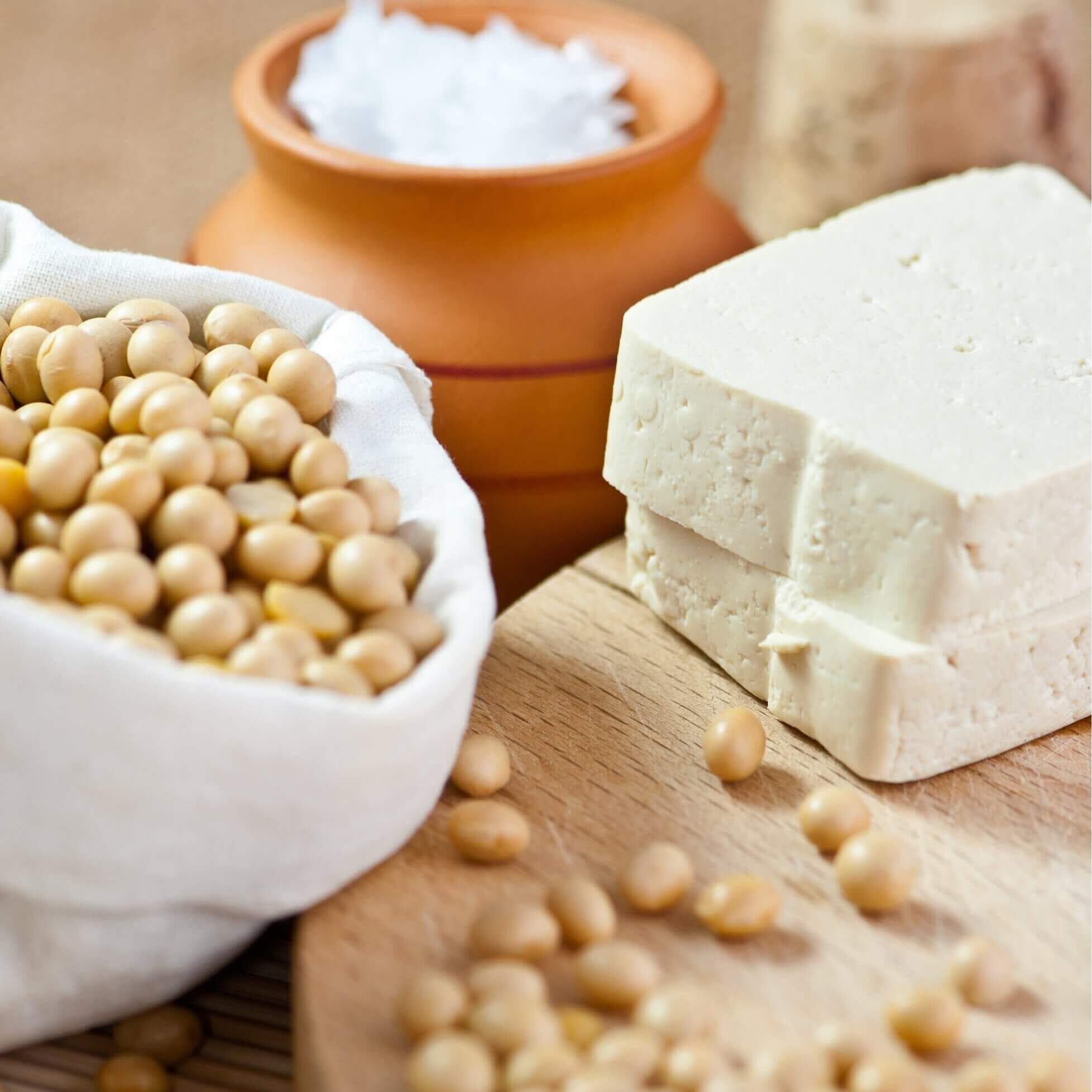
Plant-Based Proteins:
- Chickpeas
- Soy products
This variety of options means you can find good sources of L-arginine whether you prefer plant-based or animal-based proteins. For people with kidney disease, working with your renal dietitian to choose the best sources for your specific situation is important, as some of these foods may need to be limited based on your individual labs and kidney function.
Get your FREE nutrition jumpstart guide & meal plan!

The Nitric Oxide Connection: Why It Matters for Blood Pressure Management
Here's where things get interesting. L-arginine is the precursor to nitric oxide, which is essentially your body's natural blood vessel dilator. When your blood vessels dilate properly, it helps maintain healthy blood pressure and improves blood flow to your kidneys.
The Three Critical Pathways
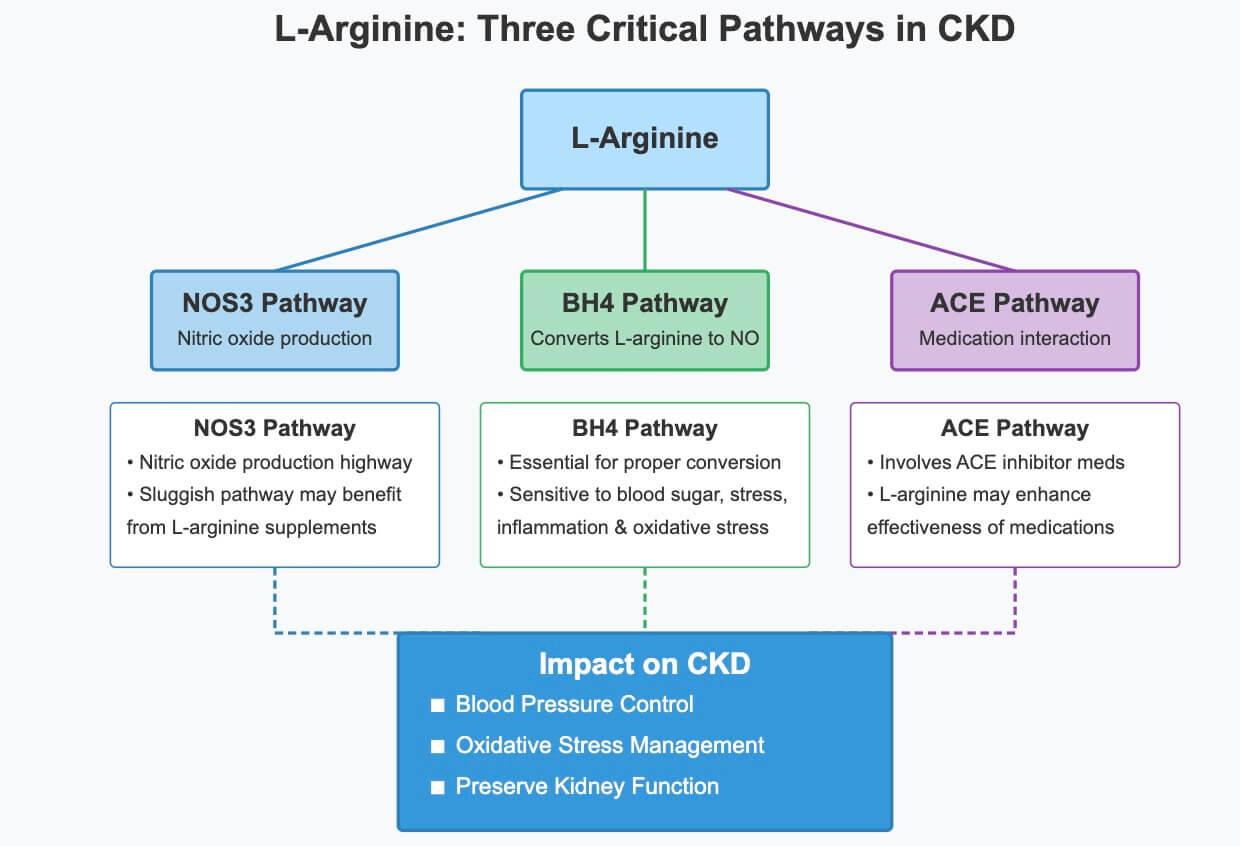
Understanding L-arginine's role in blood pressure management means looking at three key pathways:
1. The NOS3 Pathway: This is your nitric oxide production highway. If this pathway is sluggish, you might benefit from L-arginine supplementation.
2. The BH4 Pathway: This is crucial for converting L-arginine into nitric oxide effectively. BH4 (tetrahydrobiopterin) is an essential enzyme cofactor that helps your body convert L-arginine into nitric oxide. When this pathway isn't working well, adding L-arginine can actually create harmful superoxide molecules instead of beneficial nitric oxide. The BH4 pathway is particularly sensitive to:
- Blood sugar levels (high blood sugar can deplete BH4)
- Stress levels (high cortisol can impact BH4 function)
- Oxidative stress (can deplete BH4)
- Inflammation (can interfere with BH4 pathway efficiency)
3. The ACE Pathway: This involves your blood pressure medications, particularly ACE inhibitors, and how they interact with L-arginine.
When L-Arginine Might Help
You might be a good candidate for L-arginine if:
- You're struggling to control blood pressure with medications alone
- Your nutrigenomic testing shows a downregulated NOS3 pathway
- You're on ACE inhibitors but not quite reaching your blood pressure goals
- You don't have active inflammation or high oxidative stress
When to Avoid L-Arginine
L-arginine isn't for everyone. You should be cautious if:
- You have glomerulonephritis or active kidney inflammation
- Your BH4 pathway is compromised (indicated by factors like poor blood sugar control, high stress levels, or significant inflammation)
- You're following a high-carbohydrate diet that might be impacting BH4 function
- You're experiencing high levels of oxidative stress
- You have uncontrolled inflammation
What Happens When Levels Are Low?
Let's talk about what happens in your body when either BH4 or L-arginine levels drop too low - it's a bit like a domino effect that can impact your health:
When BH4 Levels Drop:
- Instead of producing beneficial compounds, your body starts generating harmful molecules called reactive oxygen species (ROS)
- Your body's nitric oxide production system (specifically something called nNOS) starts producing superoxide - think of this as rust in your body
- This creates a cycle of oxidative stress that can be hard to break
When L-arginine Levels Drop:
- Similar to low BH4, your body's nitric oxide production system gets thrown off balance
- Instead of making helpful nitric oxide, it starts producing those damaging superoxide molecules
- This can create ongoing oxidative stress in your body
Think of it like a car engine: when you don't have the right fuel (L-arginine) or the right spark plug (BH4), instead of running smoothly, the engine starts producing exhaust fumes (superoxide) that can damage the engine over time.
This is why it's so important to:
- Maintain healthy levels of both BH4 and L-arginine
- Address any underlying issues before adding L-arginine supplements
- Work with healthcare providers who understand these complex relationships
Understanding the BH4 Connection
Before diving into L-arginine supplementation, it's crucial to understand the BH4 pathway's role. When someone has a downregulated BH4 pathway (which can be identified through nutrigenomic testing), simply adding L-arginine can create a problematic cycle:
- You start with existing oxidative stress
- You add L-arginine hoping to improve blood pressure
- Due to poor BH4 function, the L-arginine creates uncoupled nitric oxide molecules
- These molecules increase oxidative stress
- The cycle continues and potentially worsens
This is why addressing BH4 pathway function first is crucial. Some strategies to support BH4 pathway function include:
- Following a lower carbohydrate diet or learning to better balance carbohydrates
- Implementing stress reduction techniques
- Using targeted supplements to reduce oxidative stress
- Following an anti-inflammatory diet protocol
- Addressing any underlying blood sugar issues
Only after these foundations are addressed should you consider L-arginine supplementation.

A Practical Approach to L-Arginine
If you're considering L-arginine, here's a smart way to approach it:
- Address the Basics First:
- Get inflammation under control
- Manage oxidative stress
- Optimize your diet
- Work on stress management
- Test Before You Invest:
- Consider nutrigenomic testing to understand your pathways
- Start with a short trial of supplements
- Monitor your blood pressure response
- Transition to Food Sources:
- Once you know L-arginine helps, focus on food sources
- Use supplements as a bridge to dietary changes
- Monitor your response to different approaches
The ACE Inhibitor Connection
One of the most exciting findings about L-arginine is its potential to enhance the effectiveness of ACE inhibitor medications. Instead of adding multiple blood pressure medications, some people find that combining L-arginine with their ACE inhibitor provides better blood pressure control without the additional medication burden on their kidneys.
Getting Professional Support
While this information about L-arginine is fascinating, implementing it effectively requires a comprehensive approach. At the Kidney Nutrition Institute, our dietitians take a thorough approach to blood pressure management that includes:
- Comprehensive Assessment:
- Reviewing current medications and their effectiveness
- Analyzing diet and lifestyle factors
- For interested patients, utilizing nutrigenomic testing to understand individual genetic variations that might affect blood pressure regulation
- Personalized Strategy Development:
- Evaluating whether L-arginine supplementation might be beneficial based on individual factors
- Creating customized dietary recommendations
- Addressing lifestyle factors that impact blood pressure
- Monitoring and Adjustment:
- Regular follow-up to assess effectiveness
- Adjusting recommendations based on response
- Working in conjunction with your medical team
This comprehensive approach helps ensure that any intervention, whether it's L-arginine supplementation or other strategies, is appropriate for your specific situation and implemented safely.

Conclusion: The Power of Personalization
The key takeaway? There's no one-size-fits-all approach to using L-arginine in CKD. Success lies in understanding your unique situation - your genetic pathways, current health status, and specific challenges. Working with healthcare providers who understand these nuances can help you develop a personalized approach that works for you.
Remember, whether through diet or supplementation, any changes to your treatment plan should be discussed with your healthcare team, especially when dealing with kidney disease and blood pressure management.
Disclaimer: This article is for informational purposes only and should not be considered medical advice. Always consult with your healthcare provider before making changes to your treatment plan.
Keywords: L-arginine, chronic kidney disease, CKD, blood pressure management, nitric oxide, ACE inhibitors, kidney health, amino acids, nutrigenomics, personalized medicine
Resources and References
- Cherla G, Jaimes EA. Role of L-arginine in the pathogenesis and treatment of renal disease. J Nutr. 2004;134(10 Suppl):2801S-2819S. doi:10.1093/jn/134.10.2801S
- Baylis, C. Arginine, arginine analogs and nitric oxide production in chronic kidney disease. Nat Rev Nephrol 2, 209–220 (2006). https://doi.org/10.1038/ncpneph0143

Work With Us
Our proprietary Kidney Health Method is the framework that we use with our patients to see HUGE results! We can do the same for you. To start feeling better NOW, book an appointment with one of our renal dietitians!